This is Part II of a two-part post, begun with Haring After Picts. Friday the 13th seems like a good day to post pictures of boxing hares…
Unlike rabbits, hares (Lepus europaeus) are—arguably—native to Britain. Certainly they’re native to much of Europe—and the species found in Britain now is the same species which was around in Europe during the Pleistocene, and so would no doubt have lived in Doggerland and therefore what is now the island of Britain before the seas rose. Some people argue that the Romans brought the hare over at the same time as the rabbit—but if this is so, how come the hare survived and the rabbit didn’t (until the Normans reintroduced them)? Consider, too, that there are tiny populations of a slightly different species—the mountain hare (Lepus timidus) very definitely native to Britain—in Ireland and a small area of Scotland, and to me it seems perfectly likely that the Romans merely reintroduced the hare to its native heath.
Basically, I just like hares. Females tend to be slightly bigger than males, and they like to fight: females often box with males they’re not interested in mating with (usually in March, hence the timing of these two posts). And these are serious fights that leave scars.
Hares, it turns out, are difficult to draw (at least for me). It’s because although in photos they look fine, as soon as you translate the image to the kind of simple lines I need for this project they look…improbable. Especially when sitting still, which is I’m guessing how the Picts would have carved them if they ever had. I think it’s the legs, which are very long, very lean, designed to take the hare running at 50 mph. (Yes, really. And that’s over short distances. At longer distances, they can get to 35 mph and say there for a while.) So those legs look weird.
The first few times I tried to draw hares they looked like rabbits. Then I altered the set of the back legs and they looked like dogs with long ears. And, yes, they really have long ears. They also have big and wide nostrils—massive air intake, like horses, to fuel speed and endurance. Their skulls are long and a bit, well, pointy.1 Even their feet are long—the back paws are very long.
So every seated hare I drew in strict Pictish style was a disaster. Eventually I thought, Screw it, and drew a) a running hare and b) used the same Pictish-joint-curl-with-Lindisfarne-Gospels-style inner-lining schema I’d developed working on the other Pictish animals.
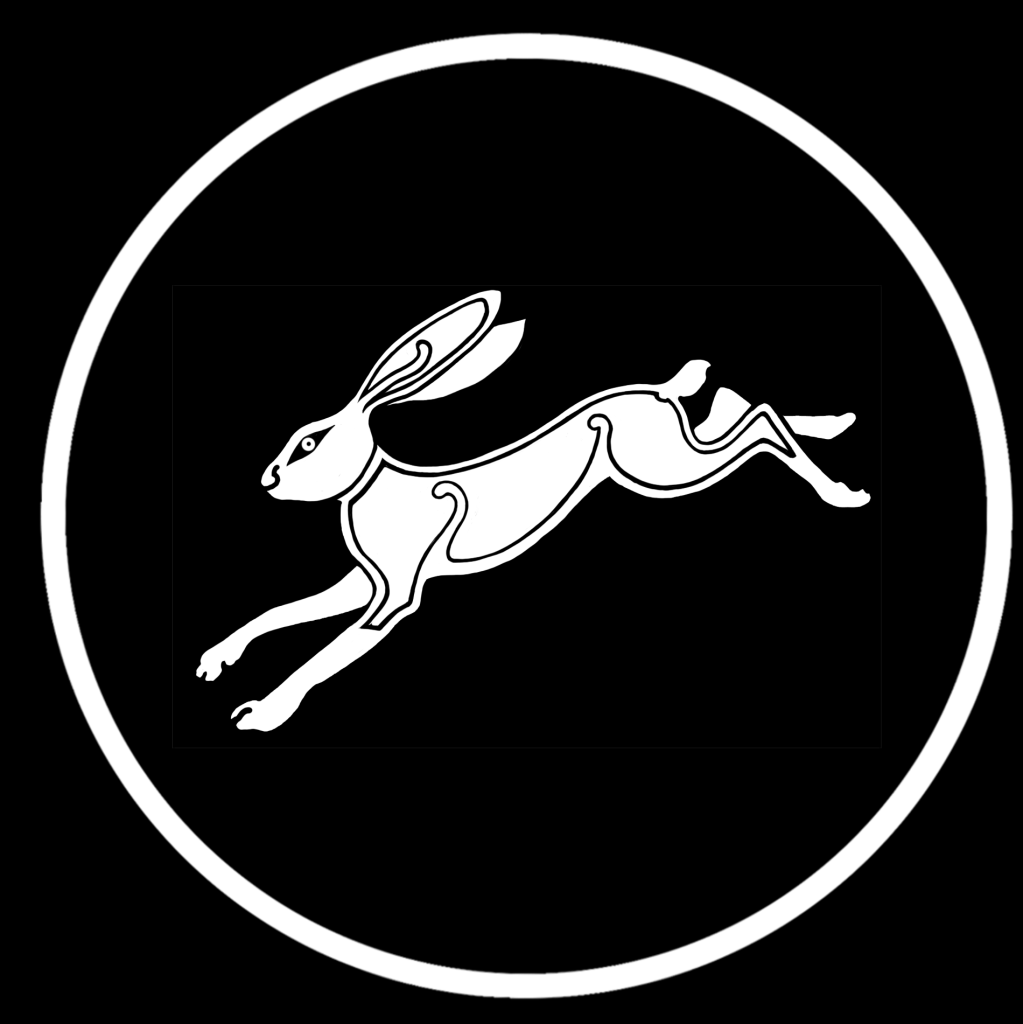
I liked that one quite a bit—even more exciting I even figured out how to do the eyes. Woo-hoo!
So then I really went for it, and did the curls the other way around to hint at aerodynamic speed…
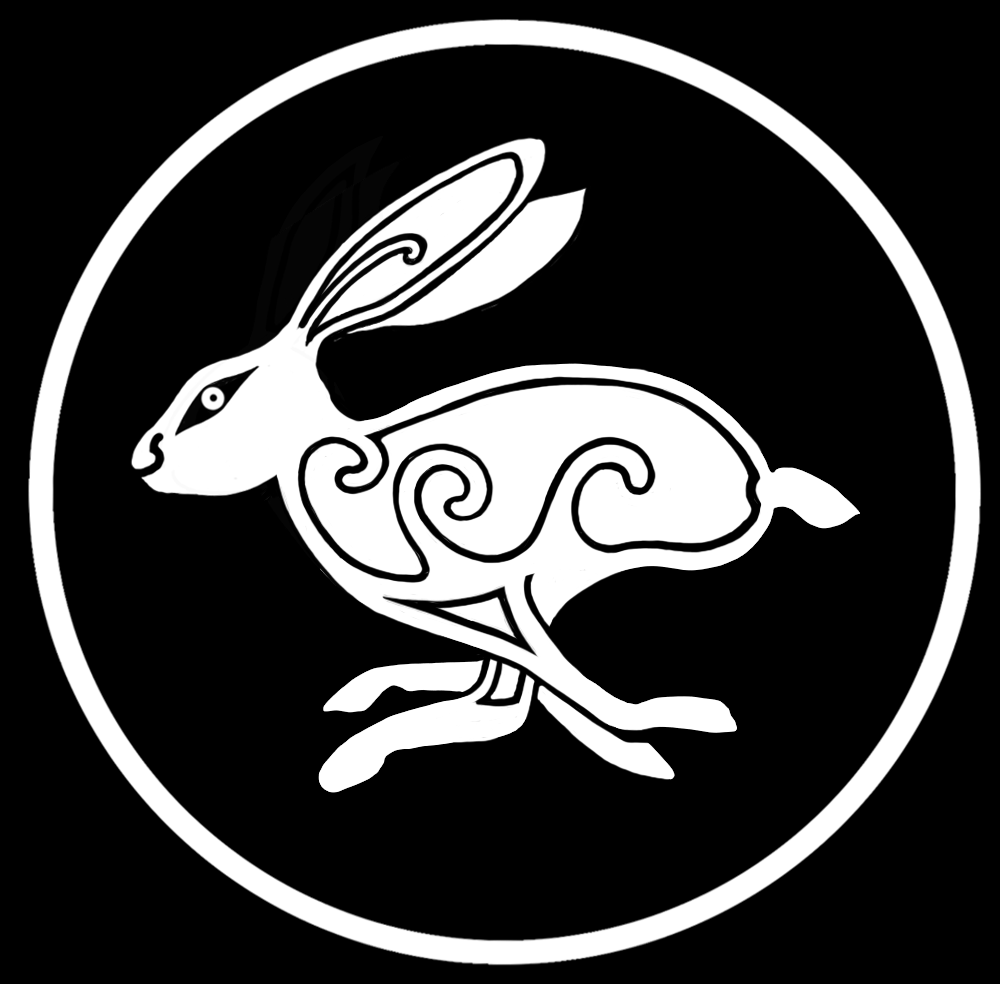
I’m not sure I’ve got the head quite right yet but, essentially, I like it.
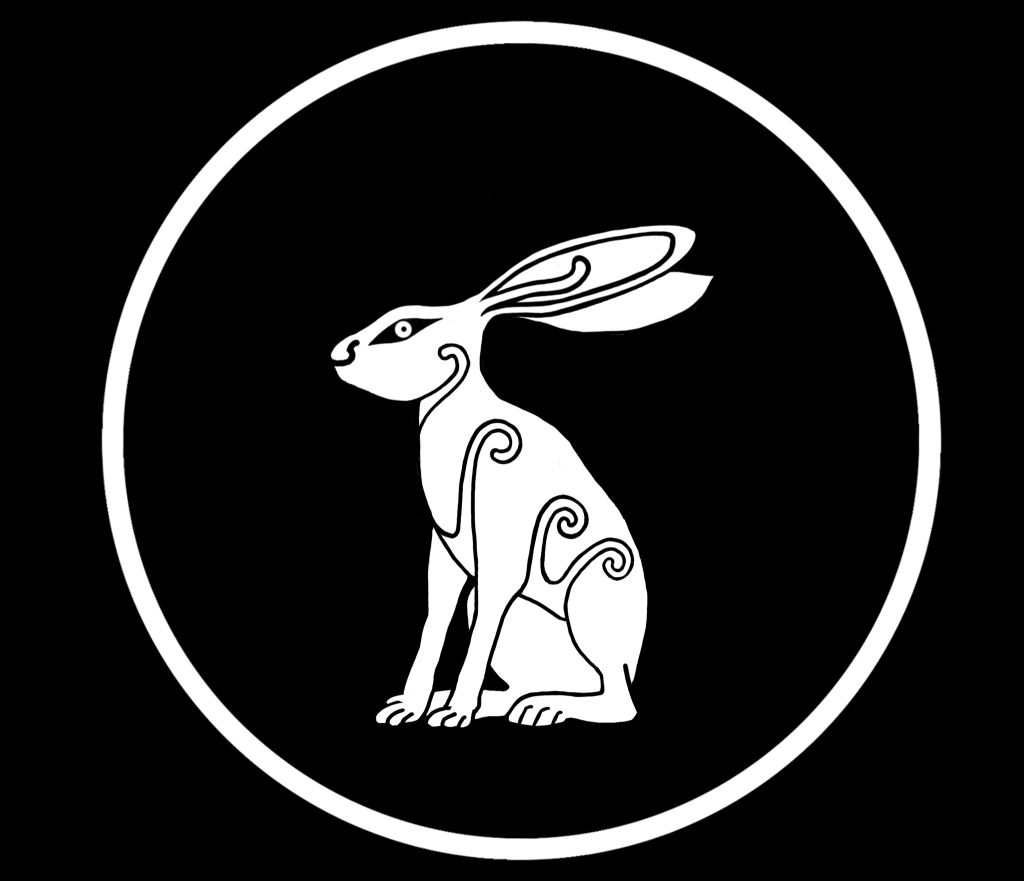
By now I felt in good form and thought, Fuck it, I can so too draw a purely Pictish seated hare! And so I did. It’s not as dynamic as the running hares, and the front paws need work, but oddly, without the Lindisfarne-style inner lines, it seems to have more personality. I think it needs a name—open to suggestions…
And so now, finally, in honour of March: hares boxing!
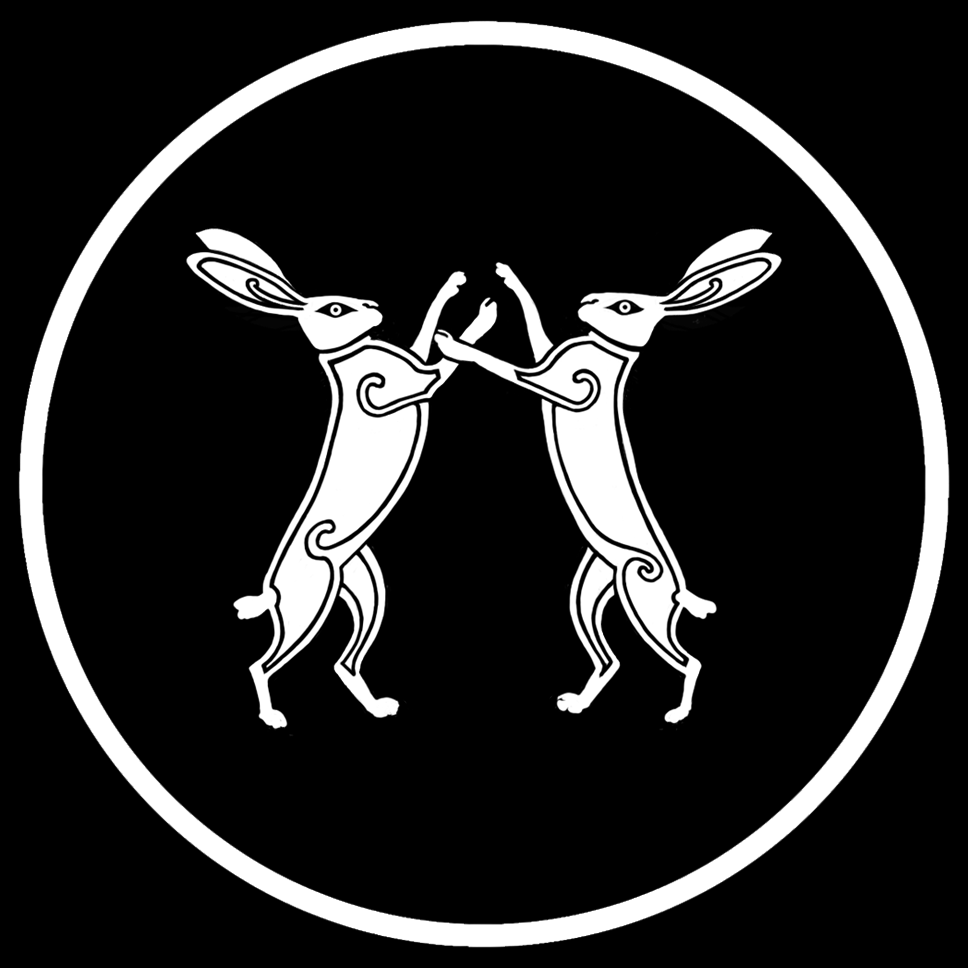
I’m happy to take bets on the winner…
- Dolichocephalic? ↩︎

 Gemæcce