A couple of months ago a reader sent me a photo of a Pictish stone I hadn’t seen.1 It was absolutely crammed with beasts, including two I hadn’t encountered on a stone before (a bear, and a goat—I think), plus two new combinations: a doe and faun, and an eagle eating a salmon.
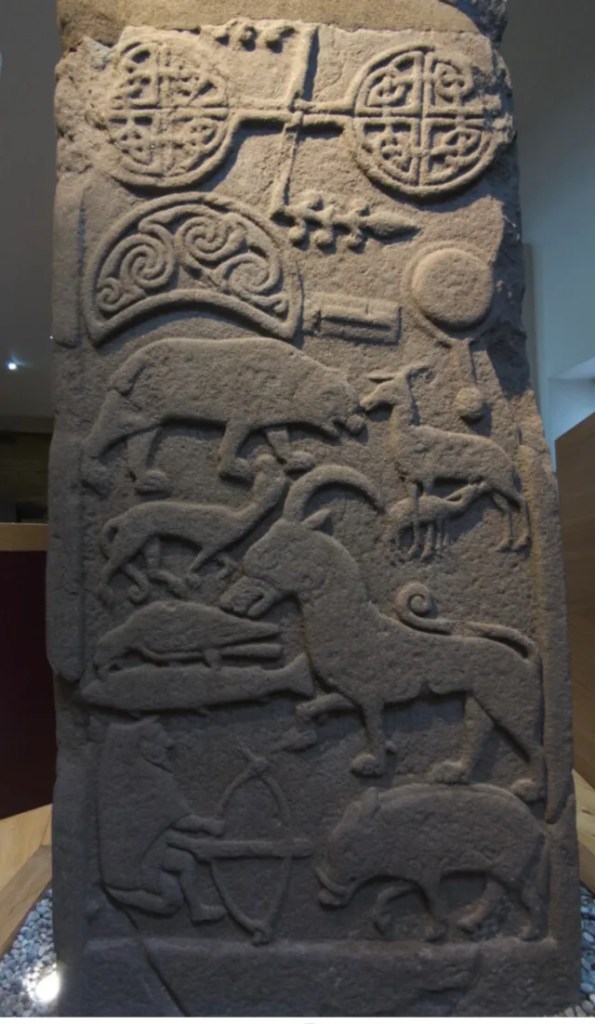
It’s a puzzling stone because some of the beasties are incredibly lifelike—the bear is easily recognisable, so much so that you can tell it’s a brown bear, and the doe and faun are lovely!—while others are, well, perhaps the kindest way to describe them is ‘stylised to strangeness’. One beast in particular, the goat, is so odd the only reason it could be a goat is the horn.2 And the eagle eating the fish is so stiff I’m guessing the stone mason had never seen such a thing happen in the wild, so they just took an image of an eagle, swivelled it 90 degrees at the hips, and made it look as though it was lying on top of the fish like a toppled tree. (As I’ve noted elsewhere, some Pictish carvers were not very good at depicting animals in motion. Static and in profile? Yes. In motion and/or turned a few degrees? No.)
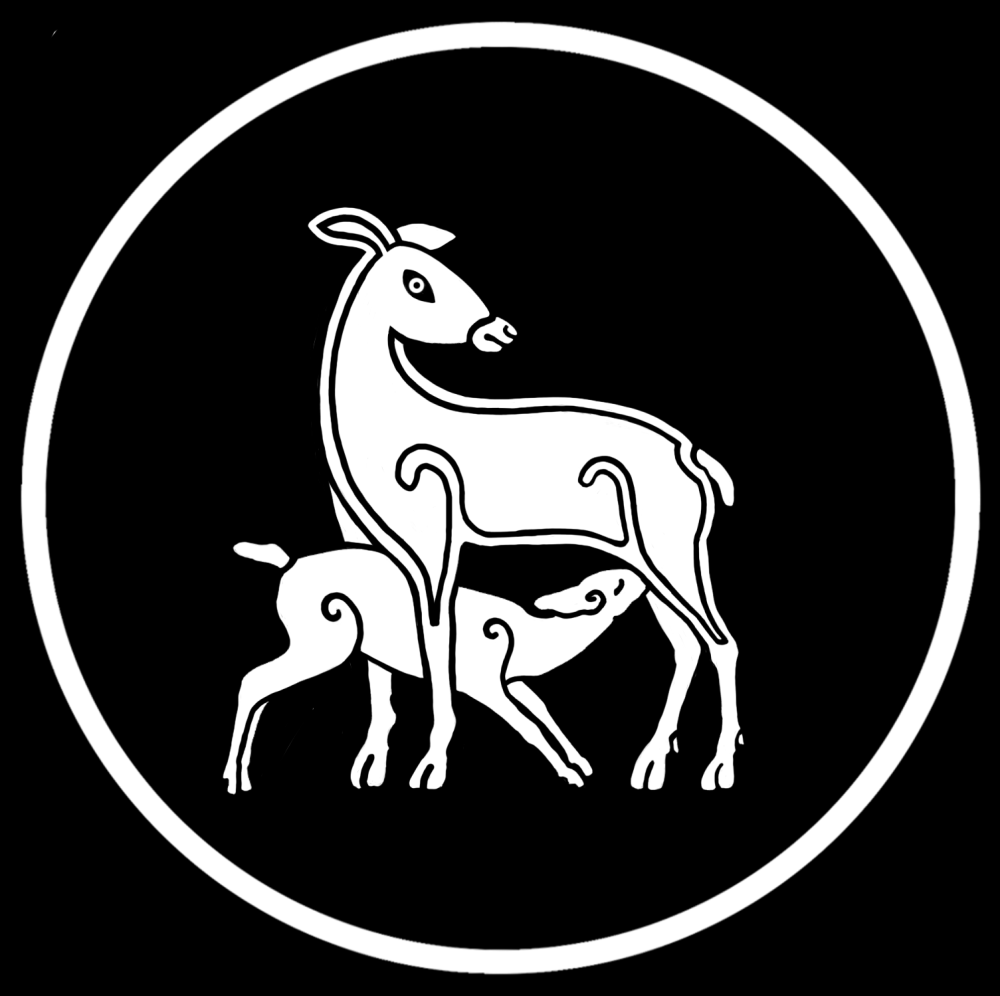
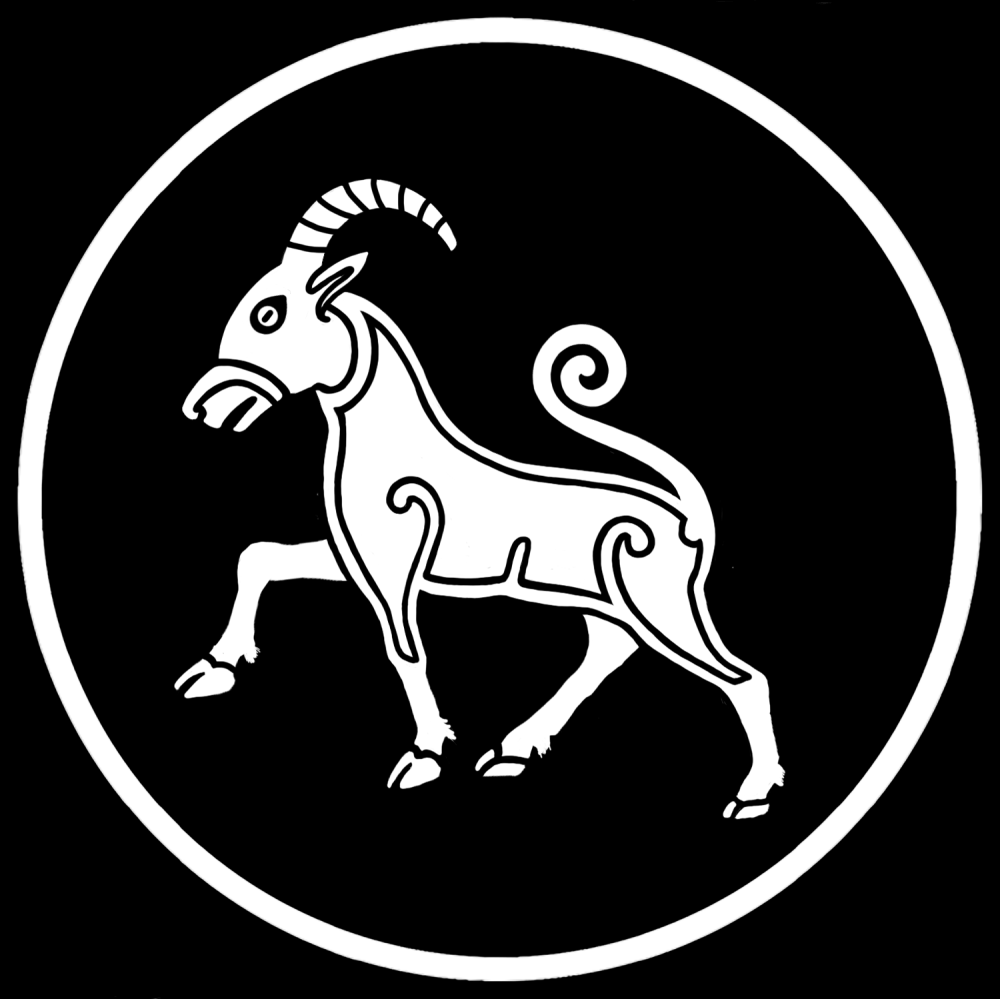
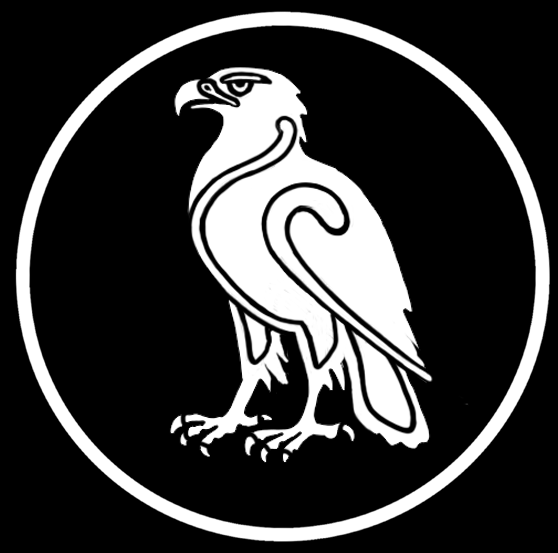
Still, I really liked that doe and faun, and I thought that if I rationalised the weird goatish beast just a bit it could at least look interesting. And then of course I thought I’d draw my own version of a Pictish eagle, only without the bother of the fish.
So that’s what I did—trying to represent Pictish style but with a slightly more 21st-century sensibility—that is, a sense of personality and a lot more movement:
I admit I completely forgot about the bear. Eh, maybe another time.
But then I started thinking about all the beasties that might, reasonably speaking, be familiar to Picts of the Early Medieval but that aren’t—as far as I know—represented on any stones.3 Things like dolphins and orcas, beavers, lynx, otters…
I’d already tried my hand at the lynx (though sadly that came out rather stiffly—it gave me much sympathy for the poor old stonemasons of yore) so I thought orcas might be cool. And they were! But. And. It turned out to be a bit difficult to render them Pictish style because—having lived in Seattle for more than 30 years—when I think of stylised orcas I tend to think of First Nations/Native American, particularly Coast Salish, imagery.4
Given that both cultures—Picts and Coast Salish—were working with the constraints of two-dimensional sculpture, it’s not surprising that there is a certain similarity between the two art styles. Anyway, to get the influence out of my system I did a version of the Tulalip Casino logo as it might have appeared on a Pictish stone. It’s a male orca (note the shape of the dorsal fin) with classic predator teeth.

Once that was done I felt better and could buckle down to a proper attempt. I wanted a killer whale, one that looked Early Medieval without also looking like the evil, mustachio-twirling villain of a silent movie. Also, given that traditionally female orcas do more hunting, I wanted her to be a girl.

I was pretty happy with that—and I wanted more of a challenge: to draw something more dynamic, less of a simple profile. So then I came up with this.

So now I couldn’t decide which I liked best. They were pretty different in tone: one serious, watchful, deadly; the other playful and carefree. And then it struck me: they belonged together!

When I worked on the hares I managed to get some dynamic figures—but they were still largely in profile. I wanted a really big challenge—and what better beastie to work with than an otter?
Otters, like hares, are very difficult to draw in simple black and white lines. The first few I tried looked like Frankenbeasts: a blend of seal, weasel and beaver. (One unfortunate version was rather like a manatee…) So then I decided to begin with basics: the dreaded static profile. And here I ran into a different problem: they looked like cute cartoons. However, after studying photo after photo of otters in the wild, then one of an otter skeletons, I finally figured out how to draw something recognisably otterly, vaguely Early Medieval, and with some personality: alert, curious, delightful but not too cute…
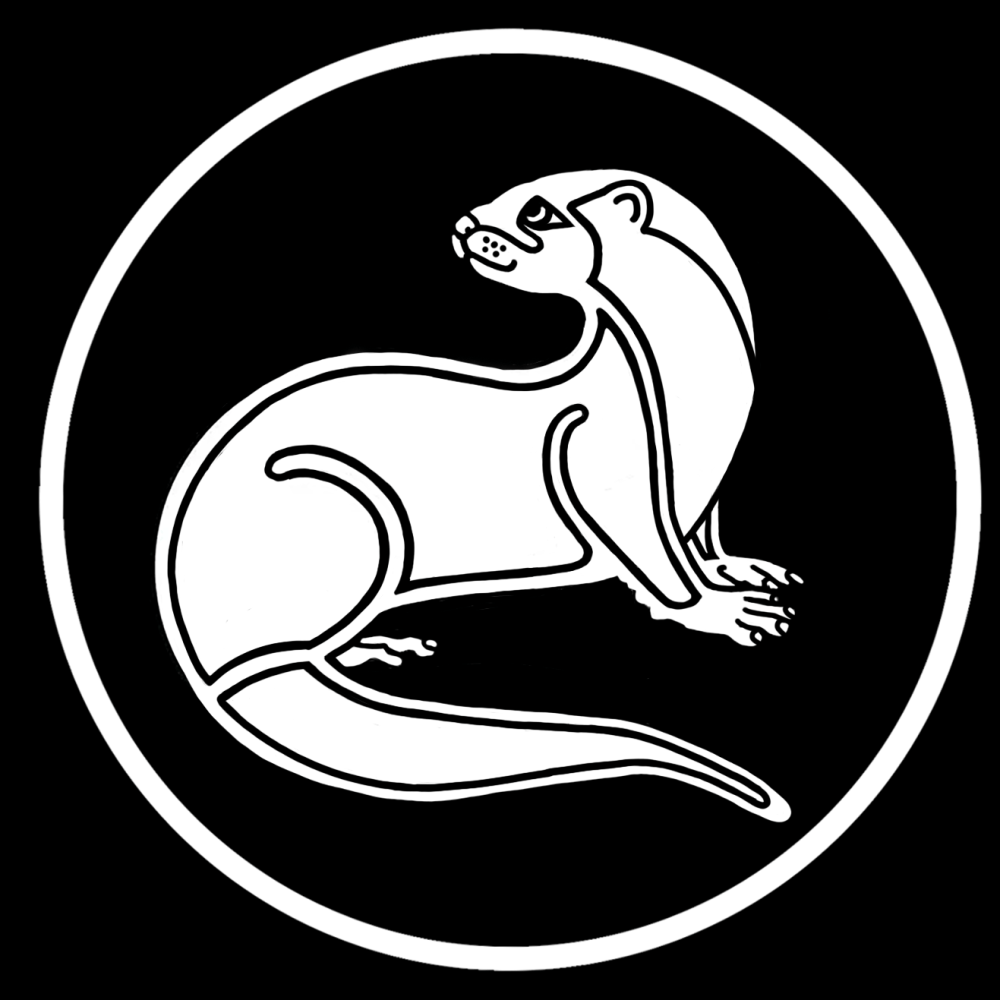
But it’s still a profile. Yes, I turned the head (I’ve learnt that’s the best way to animate an otherwise stiff pose) and artistically curved the tail but, still: a fucking profile. None of that otterly twisting, turning, diving playful curiosity that is so characteristic. So then the hard work began.
I’ll spare you the litany of woe, the shouting at my iPad, cursing the universe for making such weird and simultaneously delightful animals, and bellowing at the cats when they deleted six minutes work by thoughtfully tapping the wrong icon, and just show you what I ended up with (click through each image to larger versions).
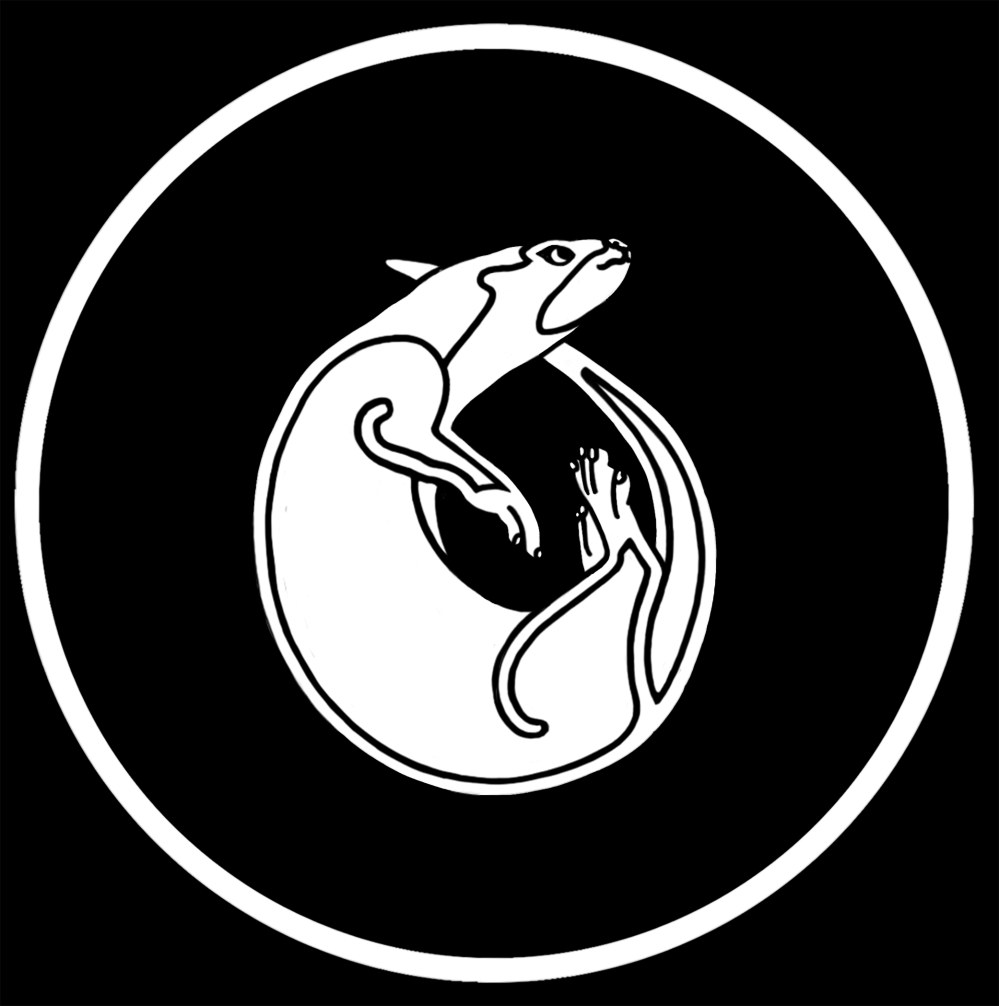
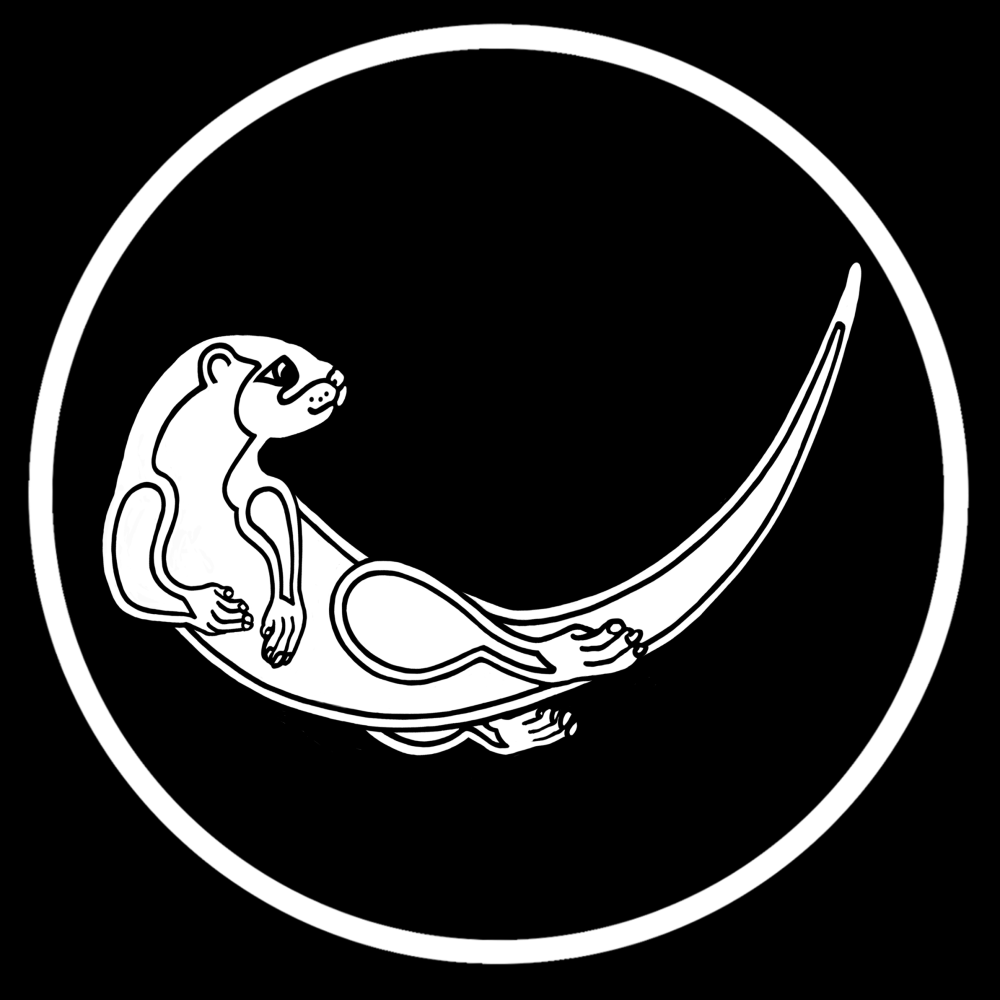
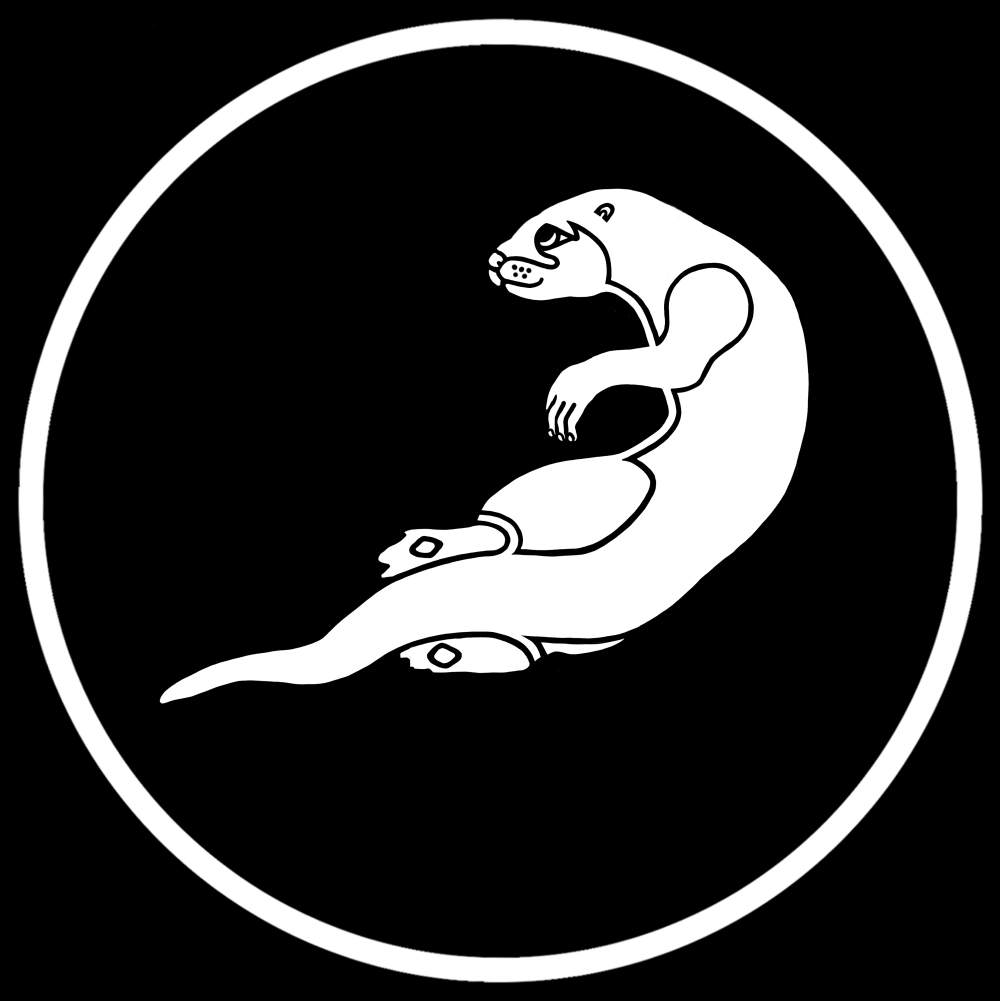
There are things about all three that I like, and things that I can’t figure out how to fix. I experimented with different ways to draw the head, the paws, the limbs. None are quite as successful in their own right as the one in simple profile. If I had to choose a favourite of these three it would be the last—it feels more alive and proportional than the other two.5 I don’t think it’s a coincidence that it’s also the one that’s least Medievalised. At my level of artistic skill (beginner, self-taught), that mix of Lindisfarne Gospels and Pictish Stones style that I’m fond of does not play nicely with dynamic movement and personality. Could an actual artist do it? Very probably. (And if one of you wants to have a go I would absolutely love to see some otters done right!)
But for now I might be done with drawing. I need to be writing.
- I’ve searched and searched but can’t seem to find who it was—sorry! ↩︎
- Hmm. Maybe also that bifurcation in the belly—which I take to be an indication of the anatomy of a ruminant. But, oof, the legs, hooves, and tail… ↩︎
- Except, maybe, dolphins/Pictish Beasts ↩︎
- See, for example, this wonderful sculpture from Kwakwaka’wakw Master Carver Bill Henderson. At the other end of the scale you get commercial casino logos, like this one for the Tulalip Bingo & Slots. ↩︎
- The middle one in particular feels sort of bulgy, not to mention stiff—a bit like a puppet on strings. ↩︎



Love them. Your creativity is energy transmitting.
I’m delighted you find them so!